Eggs en Cocotte: 39 Min

Table of Contents
Eggs en cocotte are eggs baked whole in a small ovenproof dish, a cocotte or ramekin, on a spoonful of boiling cream, standing in a bain-marie (a bath of hot water) so that the white sets gently around a soft yolk. This version is written for one cocotte with one egg, ready in 39 minutes in total, from preheating the oven to serving.
The recipe is adapted from formulas 440 and 442 of Auguste Escoffier’s A Guide to Modern Cookery (English translation published by William Heinemann in 1907, read in its revised edition of 1909; public domain in the United States according to Project Gutenberg, and Escoffier died in 1935; the steps are in our own words and the full credits are at the end of the article). Two things are ours. First, the oven temperature, 180 °C (350 °F): Escoffier says only ‘the oven’, and we took the figure from modern bain-marie recipes. Second, the baking: Escoffier stops when the white is ‘almost set’ after about ten minutes, while this page asks for 12 minutes, until the white is fully set. That is a deliberate food-safety change and an editorial estimate to check by looking at the white. The yolk stays soft, so read the food safety section before serving the dish to young children, pregnant people, older adults or anyone with a weakened immune system.
If you are looking for other ways to cook a tender egg, see our poached eggs , our creamy scrambled eggs or our guide to soft-boiled eggs . For eggs cooked in a sauce on the hob, shakshuka poaches them in a tomato sauce, and for another baked egg dish the quail eggs in potato nests bake them in crisp nests.
Utensils #
- One or more cocottes: small ovenproof porcelain or earthenware ramekins
- A deep ovenproof dish or sauté pan, large enough to hold the cocottes
- A kettle (or a saucepan) for the bain-marie water
- A small saucepan for the cream, and a tablespoon
- Oven gloves and, if you have them, tongs to lift the cocottes out of the water
- The cocotte lids or a sheet of foil
- A cloth to wipe the cocottes dry
- Small plates and folded napkins to serve on
Recipe #
Ingredients #
- 1 egg per cocotte (fresh, uncracked, from the refrigerator; the source gives no size)
- 1 tablespoon cream per cocotte, brought to the boil before use (heavy or double cream, or crème fraîche, as you prefer: the source does not name the cream)
- 2 pea-sized pieces of butter per cocotte, set on top of the egg
- salt, to taste
- pepper, to taste, optional (white pepper keeps the surface pale)
- boiling water for the bain-marie, enough to come to within 1/2 inch (about 1 cm) of the cocotte rims
Instructions #
Estimated total time: 39 min with the steps performed in sequence, including cooling and serving.
-
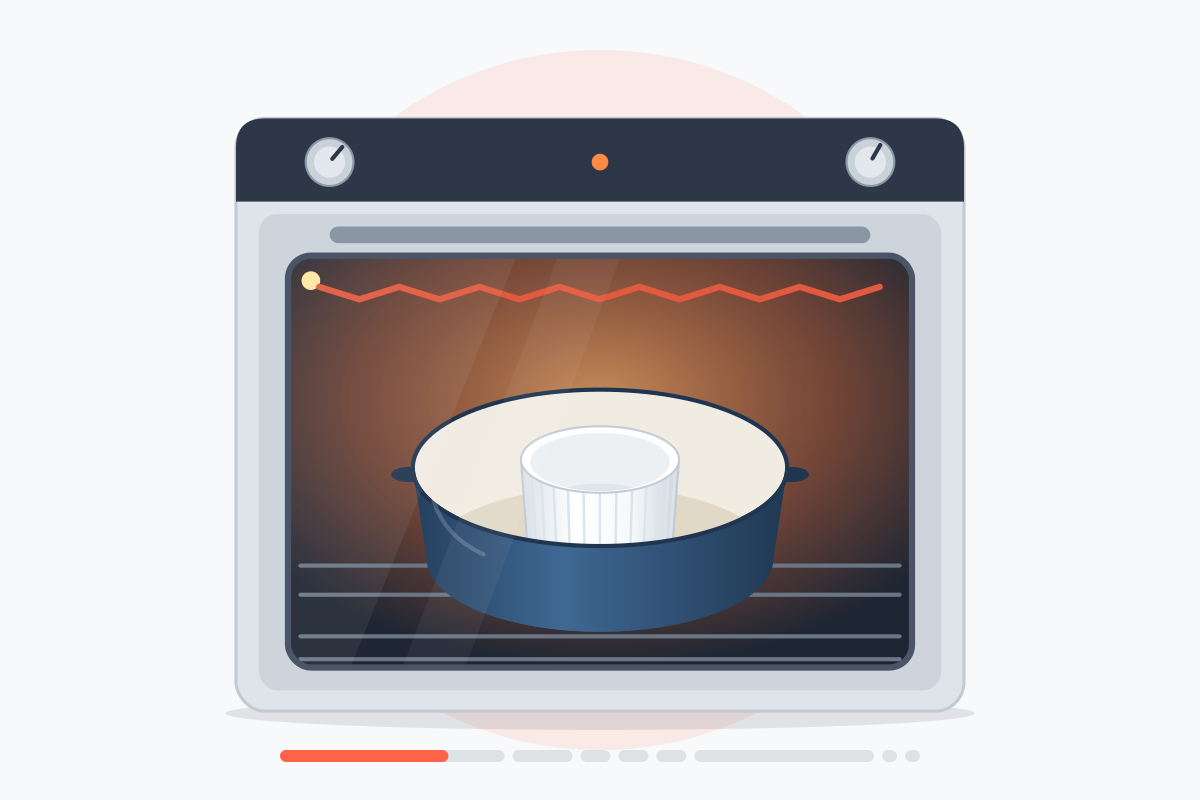
Preheat the oven with the cocottes inside: Heat a conventional oven to 180 °C (350 °F on the dial; 180 °C is exactly 356 °F). While it heats, put the empty cocottes (small ovenproof porcelain or earthenware ramekins) and a deep ovenproof dish or sauté pan that holds them inside: the source says warm cocottes speed up the cooking. It gives no oven temperature; the 180 °C comes from modern bain-marie recipes. Plan on about 15 minutes of preheating, though ovens differ. Estimated duration: 15 min.
-
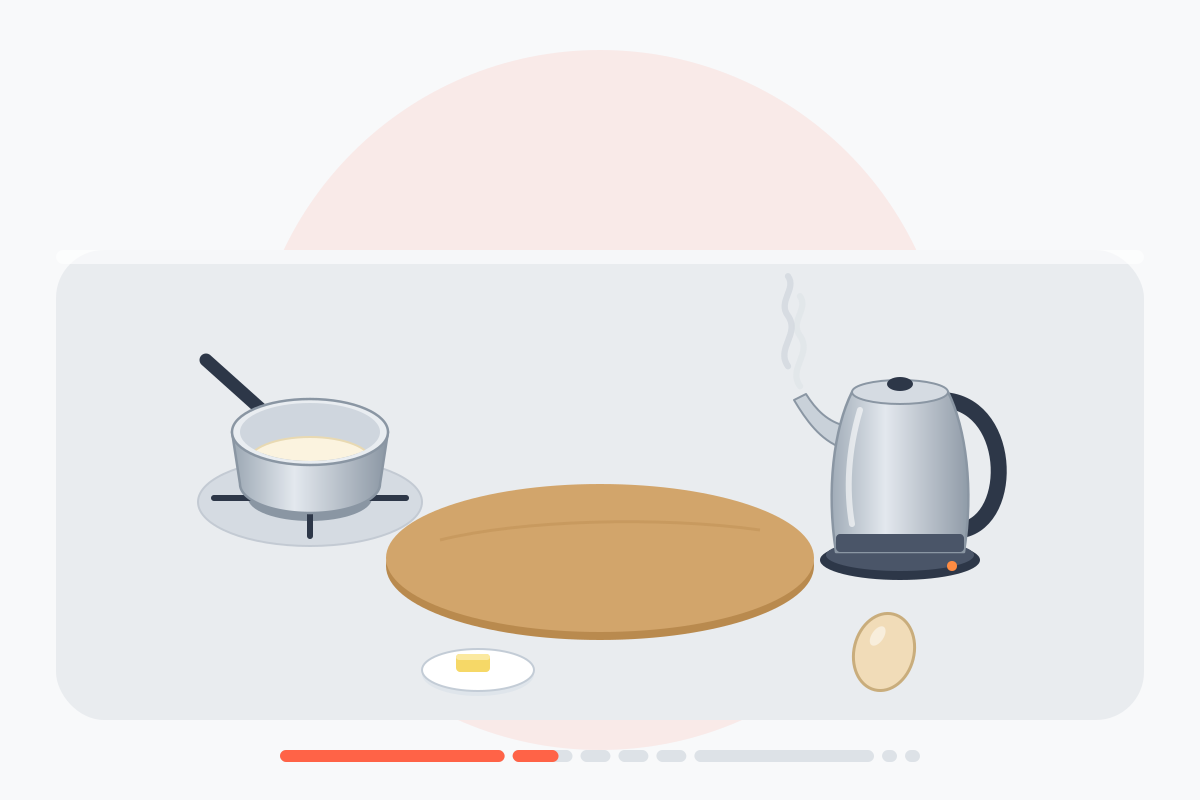
Boil the water for the bain-marie: Boil about 1 litre of water in a kettle or a saucepan for the water bath. Plan on about 4 minutes in an electric kettle; a pan on the hob will take longer. Estimated duration: 4 min.
-
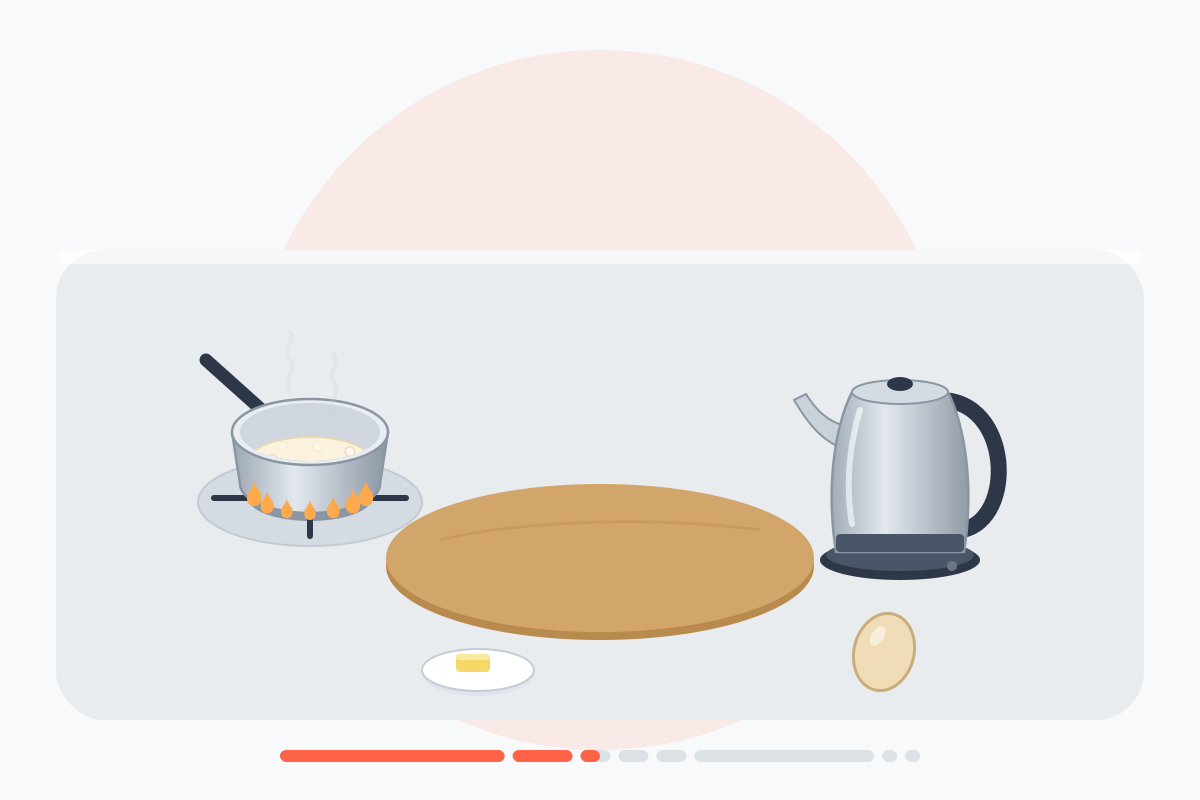
Bring the cream to the boil: Heat 1 tablespoon of cream per cocotte in a small saucepan just until it boils, then take it off the heat. Plan on about 2 minutes. Estimated duration: 2 min.
-
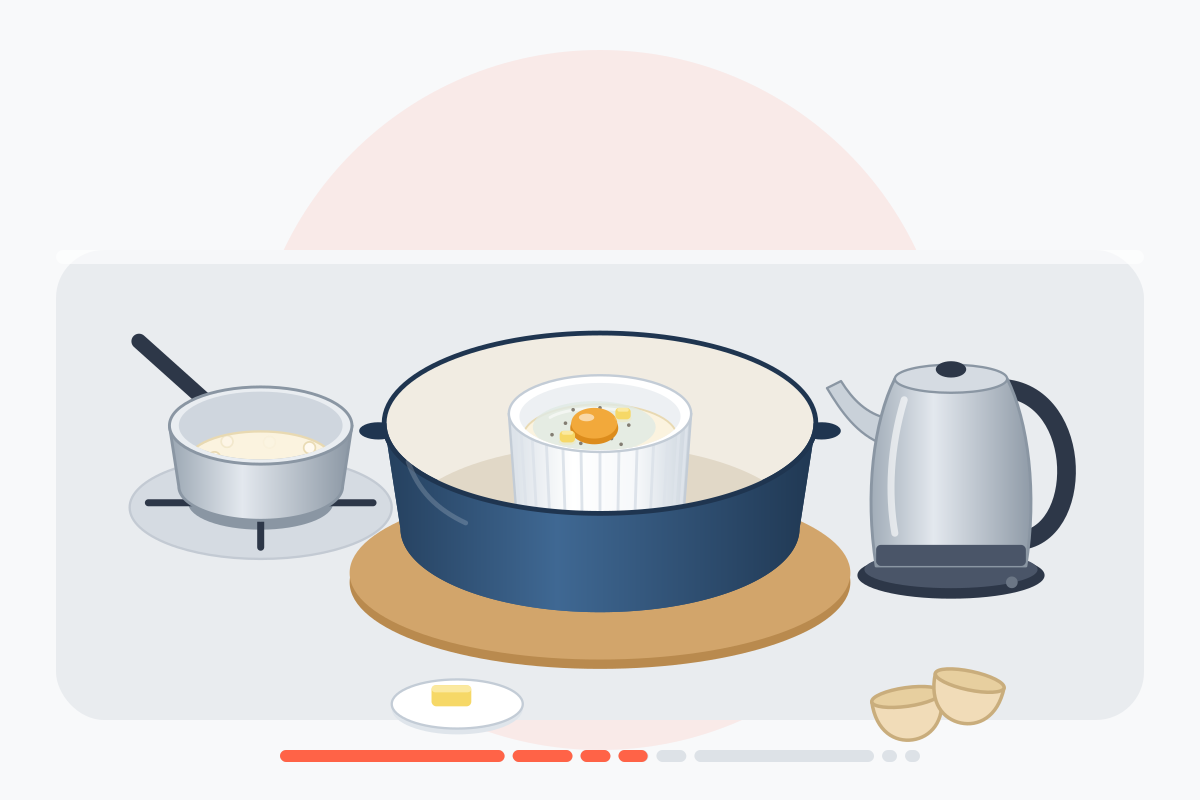
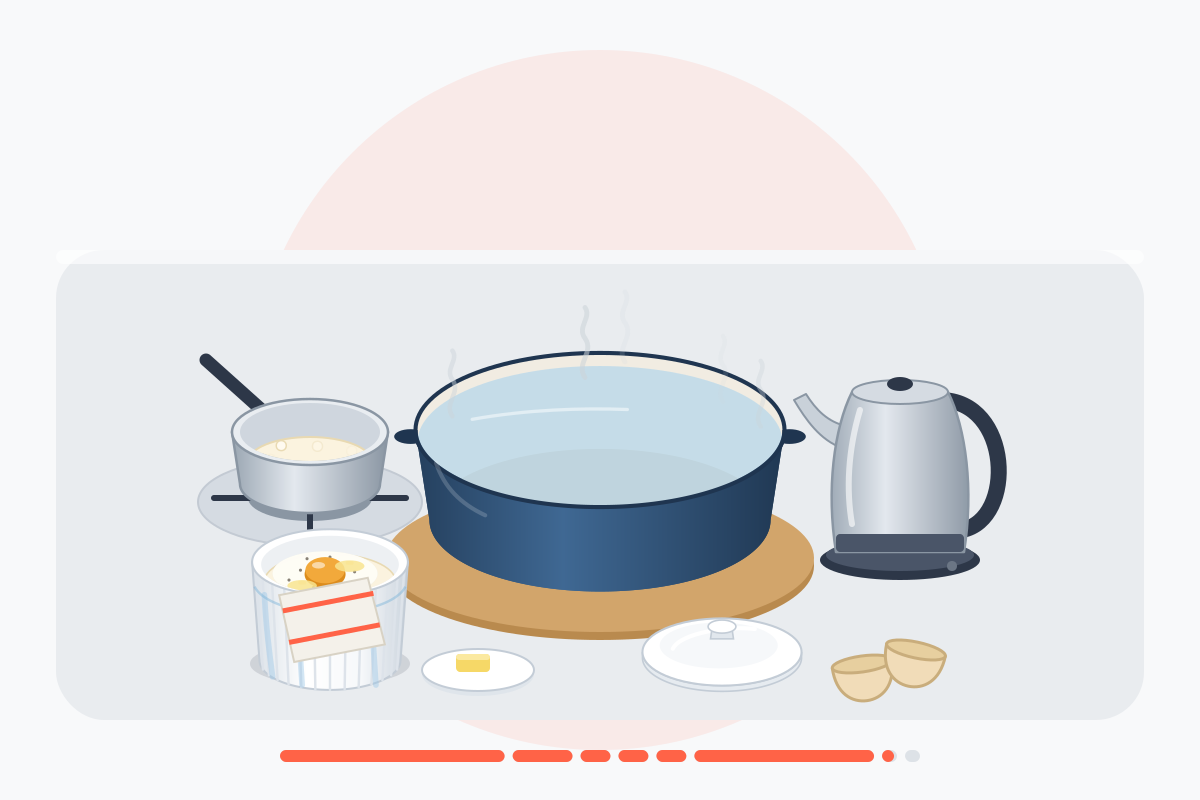
Fill the warm cocottes: With oven gloves, take the hot cocottes and the dish out of the oven and set them on a heatproof surface. Spoon the boiling cream into each one, crack one egg on top without breaking the yolk, season with salt and, if you like, pepper, and set two pea-sized pieces of butter on the egg. Plan on about 2 minutes. Estimated duration: 2 min.
-
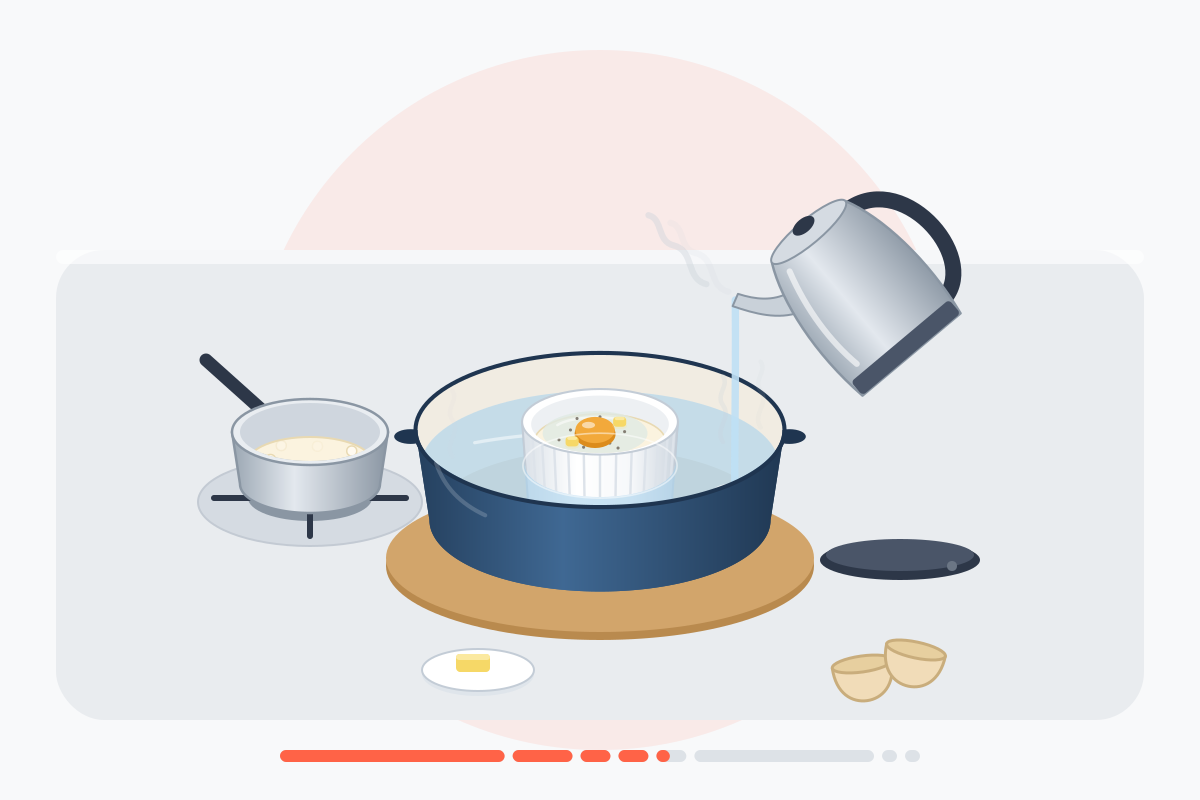
Set up the bain-marie and cover: Stand the cocottes in the hot dish. Bring the kettle back to the boil if it has stopped, then pour the boiling water around (never into) the cocottes, with the dish still on its heatproof surface, until it comes to within about 1 cm (1/2 inch) of their rims. Cover loosely (the cocotte lids set ajar, or a sheet of foil over the dish), leaving a gap for the steam to escape, as the source says. Plan on about 2 minutes. Estimated duration: 2 min.
-
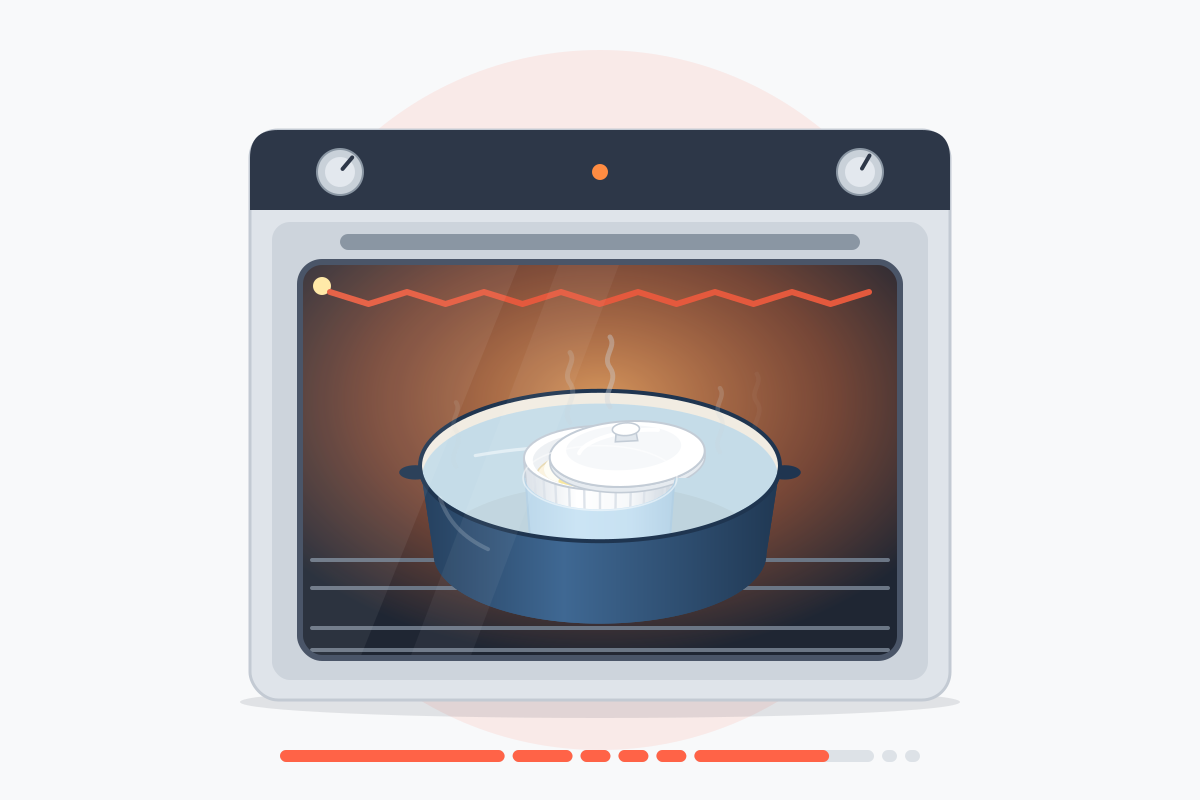
Bake in the bain-marie: Slide the dish carefully into the oven at 180 °C (350 °F) and bake for about 12 minutes. The eggs are ready when the whites are set and opaque all the way to the yolk and the yolk is still glossy and soft. Check from 10 minutes and judge by the look of the white, not the clock. The source stops at whites that are ‘almost set’, around ten minutes; we ask for fully set whites as a food-safety precaution, hence 12. Anyone who must avoid lightly cooked egg should bake longer until the yolk is set too (no tested time is given, and this extra time is not part of the 39 minutes; see the food safety section). Estimated duration: 12 min.
-
Lift out, wipe and rest: Take the dish out of the oven, lift the cocottes out of the hot water with oven gloves or tongs, wipe the outsides dry as the source does, and let them stand briefly (lifting, wiping and standing take about 1 minute in all): the egg keeps cooking in the hot cocotte. Estimated duration: 1 min.
-
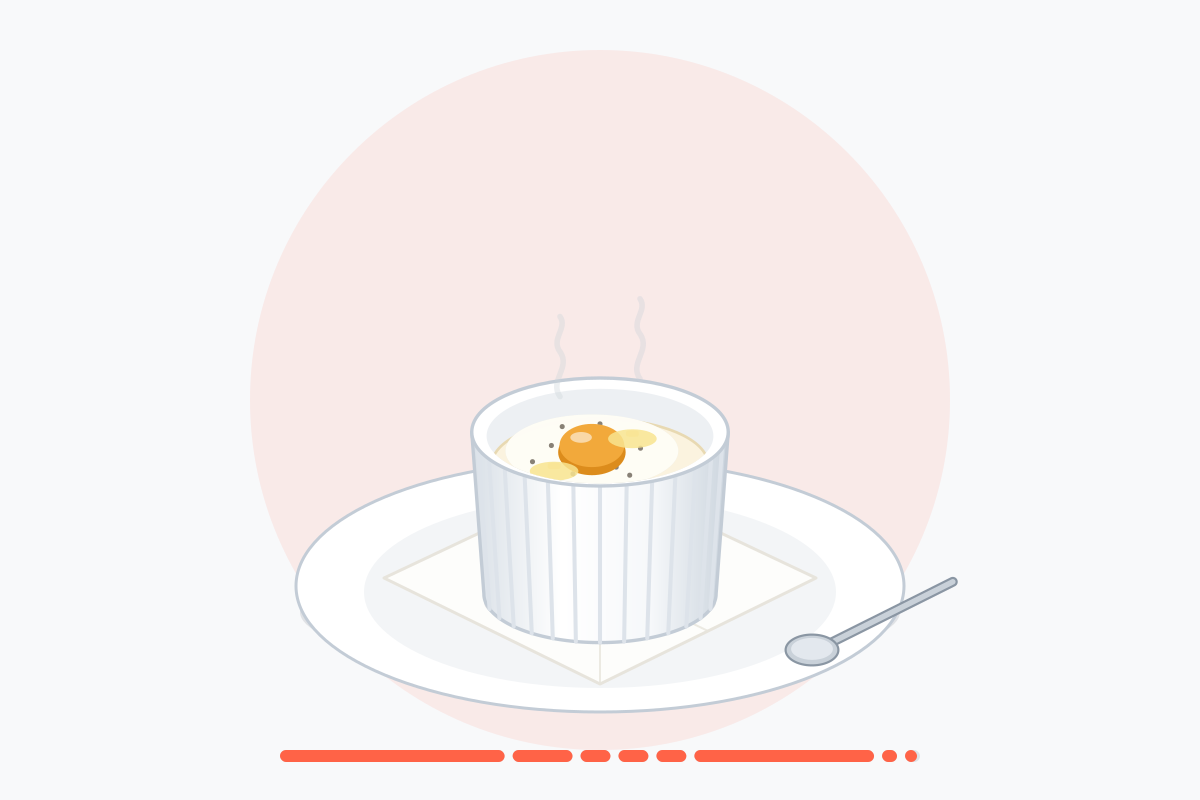
Serve at once: Set each cocotte on a small plate lined with a folded napkin (the source serves them on a napkin) and serve immediately, warning that the cocotte is hot. Plan on about 1 minute. Estimated duration: 1 min.
Tips for successful eggs en cocotte #
- Warm the cocottes before filling them. The source heats the cocottes in advance to speed up the cooking; it also avoids pouring an egg into a cold dish.
- Pour the water around the cocottes, never into them. Stop about 1 cm below the rim, as the source says, so nothing splashes into the eggs. Do it with the dish standing on a heatproof surface.
- Let the steam escape. Cover loosely: lids set ajar, or foil laid over the dish without sealing it, with a gap for the steam.
- Judge by the white, not the clock. The 12 minutes are an estimate. The white must be opaque all the way to the yolk; if it is still clear near the yolk, it needs a few more minutes.
- Mind your oven. The recipe is for a conventional oven. We have not checked fan settings, so look earlier if you use one.
- Serve at once, and remember the cocotte is hot. The egg keeps cooking in the hot porcelain, which is why the stand is brief: lifting out, wiping and standing take only about 1 minute in all.
- For several people, multiply the cocottes. Each needs one egg and one spoonful of cream, and the same dish can hold several. We have not tested large batches.
- Allergens. The dish contains egg and milk (cream, butter).
Why a bain-marie and warm cocottes cook the egg gently #
An egg set straight into a hot dish firms up quickly underneath and stays raw on top. A bain-marie avoids that imbalance: the boiling water around the cocottes heats the ceramic from the sides, more evenly than oven air does, and the temperature of the dish hardly rises above that of the water. This is general cooking knowledge rather than a result we measured, but it explains why the method gives a tender white instead of a rubbery one.
The spoonful of boiling cream at the bottom does two jobs: it forms a cushion under the egg, and it gives the cooking a head start, since it is already hot when the egg arrives. The two small pieces of butter melt over the top and leave a light sheen. The lid set slightly ajar keeps heat around the eggs while letting steam out.
The dish is a classic of French cooking, and we rely on Escoffier’s formulas 440 (the general method) and 442 (with cream). His garnished variations were left out. The source does not name the type of cream, so heavy cream or crème fraîche are editorial choices.
Where the 39 minutes go #
For the soft-yolk version, every action sits inside the total, counted one after another: preheating the oven with the cocottes (15 minutes), boiling the water (4 minutes), bringing the cream to the boil (2 minutes), filling the cocottes (2 minutes), setting up the bain-marie and covering (2 minutes), baking (12 minutes), lifting out, wiping and resting (1 minute in all) and serving (1 minute). That adds up to 39 minutes: 25 of preparation and 12 of baking, with the remaining 2 minutes going to lifting out, wiping, resting and serving. The extra time for a firm yolk is not included in these 39 minutes.
None of these durations comes from the source, which gives only ‘about ten minutes’ of cooking and says it varies. All are editorial estimates, and nothing here was timed by us. The preheat weighs the most in the total and depends on your oven; some ovens with a hidden element take longer. In practice you can boil the water and heat the cream while the oven comes up to temperature, which may shorten the real time, but we count the steps in sequence and do not promise less than 39 minutes.
Reading doneness: a set white and a glossy yolk #
The cue is the white. At first it is clear and fluid; as it cooks it turns milky, then opaque white, from the edge in toward the yolk. The eggs are ready when no clear area is left around the yolk, the cream is bubbling only faintly at the rim, and the yolk is still glossy, domed and soft.
Start checking at 10 minutes. With oven gloves on and the dish on the pulled-out rack, carefully lift the lid or foil away from your face to release the steam. Give the dish a very gentle nudge and look for any wobble around the yolk; never lift a cocotte out of the water to check. If the white is still clear near the yolk, replace the loose cover, give it a few more minutes and look again. If the yolk has turned dull and hard, the baking went further than intended: take the cocottes out sooner next time.
The source stops when the white is ‘almost set’. We deliberately ask for a fully set white, slightly more cooked: it is a food-safety change, explained in the next section.
Food safety: a soft yolk means lightly cooked egg #
Eggs en cocotte served with a soft yolk are lightly cooked, so this dish is not safe by default for everyone. The FDA advises cooking eggs until both the yolk and the white are firm, and lists children, older adults, pregnant people and people with weakened immune systems among those at greater risk of severe illness.
For these people, including infants and young children, bake a few minutes longer, checking as you go, until the yolk is firm too, or use pasteurised egg. We give no extra time for this because it has been neither documented nor tested, and it is not part of the 39 minutes: go by the result. A firm yolk is not the runny yolk this page describes, and it is the right trade-off for anyone who must avoid lightly cooked egg.
The UK Food Standards Agency takes a different position for eggs in the UK: for vulnerable people, raw or lightly cooked hen eggs should be British Lion or Laid in Britain eggs; otherwise egg dishes should be thoroughly cooked or made with pasteurised egg. That rule is specific to those UK eggs, so do not apply it to eggs of another origin. Severely immunocompromised people should seek medical advice.
Use fresh, uncracked, refrigerated eggs, and serve at once. The cream is boiled in step 3, so the cream itself is not a concern, but pasteurised cream is still the normal choice. If cooked eggs do sit at room temperature, do not leave them for more than 2 hours (1 hour if it is above 32 °C / 90 °F). This recipe is written for hen eggs; quail eggs follow the site’s separate guidance (see our complete quail egg guide ).
In the kitchen: the cocottes come out of the oven very hot and the bain-marie water is boiling. Wear oven gloves, pour the water with the dish on a heatproof surface, and tell your guests that the cocotte stays very hot at the table.
Serving ideas #
Set each cocotte on a small plate lined with a folded napkin, as the source does, and serve with a teaspoon to break the yolk into the cream. Bread or toast fingers for dipping are an optional idea: they are not in the ingredient list and are not counted in the 39 minutes.
The recipe is written for one cocotte per person. If you bake several cocottes in the same dish, the timing changes little for a few, but we have not tested large batches. Escoffier’s garnished variations were left out so that the page stays true to the cream version.
Common problems #
The white is still clear. Bake a few minutes longer. Put the lid ajar or the foil back and look again.
The yolk is hard. The baking went too far, or the cocottes stayed too long in the hot water. Take them out sooner next time and keep the stand brief.
Water got into a cocotte. It was poured too high or with a splash. Pour beside the cocottes and stop about 1 cm below the rim.
The eggs are cooking too slowly. The cocottes may not have had time to heat, or the oven may run cooler than its setting. Let the preheating run its full course.
The dish went cold too fast. Serve at once: the egg is not meant to be kept warm.
Source and credits #
This article is adapted from formulas 440 (Eggs en Cocotte) and 442 (Eggs en Cocotte with Cream) in Auguste Escoffier’s A Guide to Modern Cookery (London, William Heinemann, 1907; new and revised edition first printed in January 1909, 1920 impression), read in the electronic edition of Project Gutenberg, eBook #71395 . The book is in the public domain in the United States (Project Gutenberg’s classification), and Escoffier died in 1935, so attribution is optional; this is not legal advice, and we give it out of honesty. Only facts and procedure are taken (quantities, sequence, bain-marie, cover, doneness cue): no sentence of the book is reproduced and the steps are in our own words. Changes from the source: the 180 °C (350 °F) oven temperature is added from modern bain-marie recipes (Great British Chefs and Le Creuset Ireland); baking takes 12 minutes until the white is fully set, instead of about ten minutes until it is almost set, as a food-safety precaution; the preheat, the brief stand and all durations are editorial estimates; the type of cream is an editorial choice; the author’s garnished variations were left out; and a food safety warning was added. We have not cooked or timed this recipe ourselves: it follows the cited sources.
Frequently Asked Questions #
How long do eggs en cocotte take? #
The total is 39 minutes for the soft-yolk version, counting the steps one after another: preheating the oven with the cocottes (15), boiling the bain-marie water (4), the cream (2), filling the cocottes (2), setting up the bain-marie and covering (2), baking (12), lifting out, wiping and resting (1), and serving (1). None of these durations comes from the source, which gives only about ten minutes of cooking: they are editorial estimates, and we timed nothing ourselves. The preheat dominates the total and varies a lot from oven to oven, while the 12 minutes of baking should be judged by the look of the white.
Are eggs en cocotte safe for everyone? #
No. The yolk stays soft, so the egg is lightly cooked. According to the FDA , children, older adults, pregnant people and people with weakened immune systems are at higher risk of severe illness, and both yolk and white should be firm. For them, bake a few minutes longer, checking as you go, until the yolk is firm too, or use pasteurised egg. We give no tested time for this, and it is not part of the 39 minutes: go by the look. The UK Food Standards Agency rule about British Lion or Laid in Britain eggs is specific to the UK and does not apply to every egg. For quail eggs, see our complete quail egg guide : they must be fully cooked for everyone.
How do I know when eggs en cocotte are done? #
Watch the white, not the clock. It should be set and opaque all the way to the yolk, with no clear or wobbly area around the yolk, while the yolk itself stays glossy and domed. Start checking at 10 minutes, lift the lid or foil carefully (steam escapes), and if the white is still clear, cover again and give it a few more minutes, checking again. A hotter or cooler oven, or thicker cocottes, change the time.
Can I make eggs en cocotte in a fan oven? #
The recipe is written for a conventional oven at 180 °C (350 °F). We have not checked fan-oven settings: if you use one, look at the eggs earlier than usual and still judge by the white. The temperature is not in Escoffier’s text; it comes from two modern bain-marie recipes.
Can I make eggs en cocotte ahead or keep leftovers? #
We have no tested advice for making them ahead or reheating them, and we do not recommend it: the egg keeps cooking in the hot cocotte and the dish is meant to be served at once. If cooked eggs do sit out, do not leave them for more than 2 hours (1 hour if the room is above 32 °C / 90 °F), then refrigerate or throw them away.
How are eggs en cocotte different from poached eggs or shakshuka? #
Poached eggs cook directly in simmering water on the hob (see our poached eggs ), and shakshuka cooks eggs in a spiced tomato sauce, also on the hob. Eggs en cocotte bake whole in the oven on a spoonful of boiling cream in a bain-marie: the heat is gentler and indirect, and the yolk can stay soft inside a fully set white.